Blinds are one of the most familiar window treatments found in homes, yet many homeowners don’t fully understand how they function or why they work so well in different spaces. In coastal areas like Wilmington, managing sunlight, privacy, and indoor comfort is a daily consideration. Blinds provide a structured way to control natural light without completely closing off the outside world. With a small adjustment, you can soften glare, improve privacy, or change the mood of a room. Learning how do blinds work helps you make smarter decisions about placement, materials, and control options. This guide explains blinds from the ground up, giving you a clear understanding of how they operate and where they perform best in homes across New Hanover and Brunswick County.
What Are Window Blinds? Definition, Types, and Uses

Window blinds are hard window coverings made up of connected components that move together as a system. Unlike window coverings that operate as a single sheet, blinds allow you to adjust light incrementally. This layered control is what makes them so versatile in residential settings. You can maintain privacy while still allowing daylight into the room, something many homeowners value in bright coastal environments.
Blinds are typically installed within the window opening or mounted just above it. At the top, a headrail houses the internal mechanisms that control movement. Below it, the body of the blind responds to tilt and lift actions. This structure allows blinds to serve multiple purposes throughout the day—softening morning light, blocking harsh afternoon sun, or closing off views in the evening.
Homeowners often choose blinds for their adaptability. They work well in spaces where lighting conditions change frequently, such as living rooms, kitchens, and home offices. In bedrooms, blinds provide privacy while still allowing controlled daylight. In homes near the coast, blinds are especially useful for balancing bright sunlight with comfortable indoor conditions. Their clean, structured appearance also makes them compatible with a wide range of interior styles.
How Do Blinds Work? A Step-by-Step Breakdown
Understanding how blinds work starts with the headrail. This top section contains the internal systems that control both vertical movement and angle adjustment. While designs vary, most blinds rely on two coordinated mechanisms: one to raise or lower the blind and another to tilt it.
The lift mechanism controls height. When activated, internal components release or hold tension, allowing the blind to move up or down smoothly. Once the desired height is reached, the mechanism locks the blind in place. This allows you to fully open the window, partially cover it, or stop anywhere in between.
The tilt mechanism works separately. It rotates internal parts that change the angle of the blind’s structure. This is what lets you redirect sunlight upward, downward, or close it off completely. The ability to adjust the angle without changing the height is a defining feature of blinds and a major reason they’re so effective at light control.
Cordless systems use internal tension rather than hanging cords, making operation more streamlined. Motorized blinds use the same core mechanics but rely on a motor instead of manual input. Regardless of the control method, the principle remains the same: blinds offer layered control through coordinated mechanical movement.
What Are Blinds Made Of? Materials Explained
Blinds are manufactured from rigid materials selected for durability, performance, and appearance. Material choice plays a major role in how blinds respond to sunlight, humidity, and daily use—especially in coastal homes.
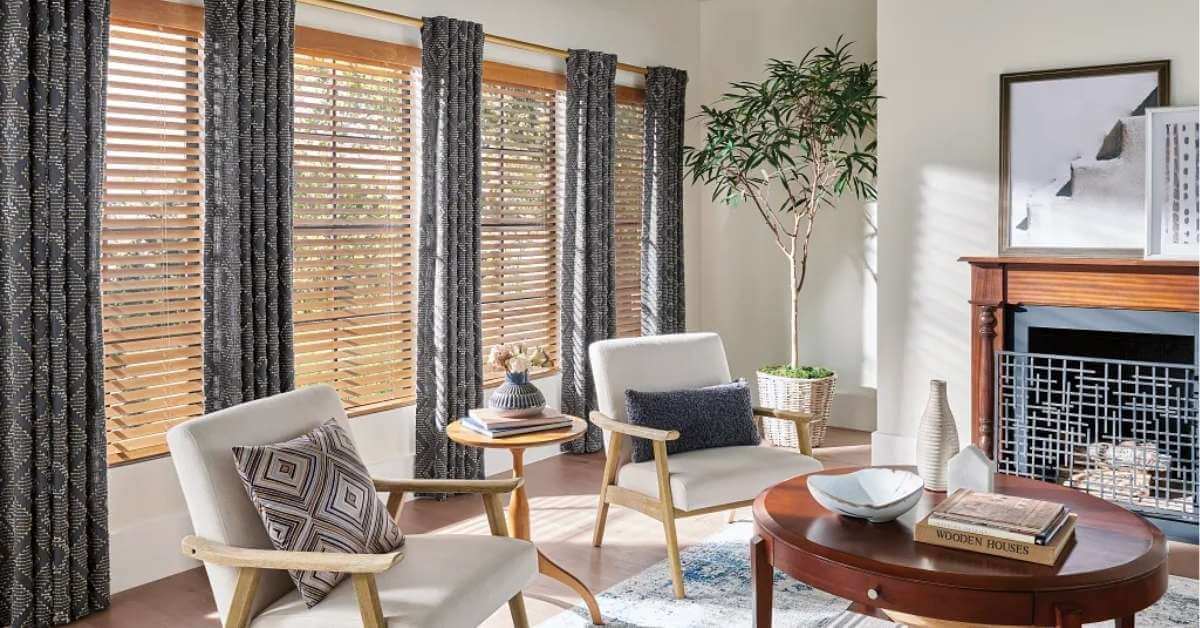
Wood blinds are commonly used in living rooms, bedrooms, and offices where a natural, structured look is preferred. They perform best in spaces with stable indoor conditions and are valued for their classic appeal.
Faux wood blinds are made from composite or PVC-based materials designed to withstand moisture. These are often chosen for kitchens, bathrooms, and laundry areas where humidity is more common. Their durability makes them a practical option in coastal environments.
Aluminum blinds are lightweight and resistant to corrosion. They are frequently used in contemporary spaces, home offices, or utility rooms. Their slim profile allows them to sit close to the glass, creating a clean visual line.
Vinyl and composite vertical blinds are well-suited for wide openings such as sliding doors. They move along a track and rotate to control light, making them functional in high-traffic areas. Choosing the right material ensures your blinds perform reliably and age well over time.
Types of Window Blinds Explained
Different blind styles are designed to suit different window sizes, layouts, and daily routines. Understanding these types helps you choose blinds that function smoothly and complement how you use each space.
Horizontal blinds are the most widely used style for standard windows. They lift upward and tilt to control light, making them suitable for bedrooms, living rooms, and offices.
Vertical blinds move side to side along a track. They are commonly used for sliding glass doors and wide windows where frequent access is needed.
Mini blinds offer a slimmer profile and are often used in smaller windows or secondary spaces where simplicity is preferred.
Panel track blinds use large sliding panels and work well in modern homes with expansive glass areas.
Common Blind Types and Best Uses
Blind Type | Typical Application | Primary Advantage |
Horizontal | Standard windows | Precise light adjustment |
Vertical | Sliding doors, wide openings | Easy movement and access |
Mini | Small or narrow windows | Compact appearance |
Panel Track | Large glass areas | Clean, modern coverage |
Each type uses the same core mechanics but adapts movement and layout to different architectural needs.
How Do Motorized Blinds Work?

Motorized blinds operate using a small motor concealed within the headrail. Instead of manual adjustment, movement is controlled electronically through a remote, wall control, mobile app, or smart home system. For many homeowners exploring how blinds work in modern homes, motorization adds a new level of convenience.
The motor activates the same lift and tilt functions found in manual blinds. Power may come from rechargeable batteries, plug-in systems, or direct wiring. Once powered, the blinds respond to commands with smooth, consistent motion.
Motorized blinds are especially helpful for tall windows, stairwells, or hard-to-reach areas. They also improve safety by eliminating exposed cords. Many systems allow scheduling, so blinds can adjust automatically throughout the day in response to sunlight or time of day.
Beyond convenience, motorized blinds support consistent light management. By automating movement, homeowners can reduce glare and maintain comfort without constant manual adjustment. The mechanics remain the same—only the method of control changes.
Blinds vs Shades: Key Differences
Blinds and shades are often grouped together, but they operate very differently. Blinds rely on adjustable components that tilt and lift, while shades move as a single continuous piece. This difference affects how each option manages light, privacy, and daily use.
Blinds allow you to fine-tune light without fully opening or closing the window covering. This makes them ideal for rooms where daylight changes throughout the day. Shades, on the other hand, are typically either up or down, offering less incremental control.
Comparison Overview
Feature | Blinds | Shades |
Light control | Adjustable through tilting | Controlled by height |
Privacy control | Flexible at different angles | Strong when fully lowered |
Visual structure | Clean, architectural lines | Smooth, uninterrupted surface |
Maintenance | Regular dusting | Less frequent surface cleaning |
Understanding these differences helps homeowners select the right option based on how a room is used rather than appearance alone.
Where Do Blinds Work Best in a Home?
Blinds are adaptable enough to work throughout most homes, but certain rooms benefit more from their structured control. In living rooms, blinds manage glare while preserving views, especially in sun-facing spaces.
Bedrooms benefit from the ability to balance privacy with natural light. Blinds allow occupants to soften early morning light or block visibility at night without fully darkening the room.
Kitchens and dining areas often favor blinds because rigid materials handle everyday activity well. Bathrooms and laundry rooms benefit from moisture-resistant options, while home offices rely on blinds to reduce screen glare.
In coastal homes, blinds help manage changing daylight conditions while maintaining comfort. Their adaptability makes them a practical choice across many rooms.
Are Blinds Energy Efficient?
Blinds can support indoor comfort by helping regulate how sunlight enters a room throughout the day. While blinds are not insulation on their own, their adjustable design allows homeowners to respond to changing light conditions in ways that reduce heat buildup and glare. When blinds are closed or angled during peak sun exposure, they limit direct sunlight from hitting interior surfaces. This helps rooms feel more comfortable, especially during warmer parts of the day.
The ability to tilt blinds is key to their efficiency. Instead of blocking light entirely, blinds allow you to redirect sunlight upward or downward. This softens brightness while still allowing natural daylight into the space. For homeowners learning how do blinds work, this flexibility explains why blinds are often used in sun-facing rooms.
In cooler months, closing blinds at night creates an extra barrier between the room and the window. While this does not replace proper insulation, it can reduce drafts and help maintain a more consistent indoor feel. Motorized blinds enhance this benefit by maintaining consistent positioning throughout the day. When used intentionally, blinds become part of a broader strategy for managing light and indoor comfort year-round.
How Long Do Blinds Last?
The lifespan of blinds depends on material quality, frequency of use, and the environment in which they are installed. Well-made blinds that are properly installed and cared for often last many years with reliable performance. Understanding how blinds work mechanically can also help homeowners operate them more gently, which directly affects longevity.
Sun exposure is one of the biggest factors influencing wear. Windows that receive strong, daily sunlight may cause materials to age more quickly over time. In humid or coastal environments, moisture can also impact performance if the material is not well-suited to those conditions. Selecting the right material for each room helps reduce long-term stress on the blind.
Usage habits matter as well. Blinds that are adjusted multiple times a day experience more mechanical wear than those moved occasionally. Cordless and motorized systems often experience more even wear because movement is controlled and consistent. Signs that blinds may need replacement include difficulty lifting or tilting, uneven alignment, or inconsistent operation. Regular cleaning and professional installation can significantly extend the usable life of blinds.
Are Blinds Easy to Clean?
Blinds are generally easy to maintain, which is one reason they remain a popular window treatment choice. Because blinds are made from rigid materials, dust tends to sit on the surface rather than becoming embedded. Regular light cleaning helps preserve the appearance and keeps the operating mechanisms working smoothly.
Routine maintenance usually involves dusting with a microfiber cloth, duster, or vacuum attachment. Tilting the blinds one direction allows you to clean one side, then reversing the tilt exposes the other side. Homeowners who understand how blinds work often find this process quick and efficient.
Occasional wiping helps remove fingerprints or residue from everyday use. A lightly damp cloth is typically enough for most rigid materials. Consistency is important; frequent light cleaning reduces the need for deeper maintenance later.
Vertical blinds often collect less dust due to their orientation, making them especially easy to maintain in high-traffic areas. Keeping blinds clean not only improves appearance but also helps them operate more smoothly. Dust and buildup can interfere with movement over time, so routine care supports both function and longevity.
How Much Do Blinds Cost?
The overall cost of blinds varies based on material selection, window size, customization, and operating system. Because blinds are available in many configurations, the investment depends largely on how closely they are tailored to your home. Understanding how do blinds work can help homeowners better evaluate which features are most valuable for their daily needs.
Material choice influences durability and performance. Some materials are better suited for moisture-prone areas, while others work best in controlled indoor environments. Larger windows and wide openings require more substantial systems, which can affect planning and selection.
Customization also plays a role. Blinds that are measured specifically for each window typically fit better and operate more smoothly. Operating systems such as cordless or motorized options add convenience, particularly for hard-to-reach or frequently adjusted windows.
Installation complexity matters as well. Straightforward windows require fewer adjustments, while angled or multi-panel openings may need additional consideration. Because each home is different, a professional consultation is the most reliable way to understand which blind options align best with your space and priorities.
Are Blinds Worth It?
Blinds remain a practical and adaptable window treatment option for many homeowners. Their primary advantage is precise light control. Instead of choosing between fully open and fully closed, blinds allow gradual adjustments throughout the day. This flexibility is often what prompts homeowners to explore how blinds work when comparing window treatments.
Blinds also offer strong privacy control. By adjusting the angle rather than height, you can limit visibility from outside while still allowing daylight into the room. This makes blinds especially useful for street-facing windows or closely spaced homes.
From a maintenance standpoint, blinds are relatively easy to care for and hold up well with routine cleaning. Their structured design supports consistent operation over time, especially when paired with quality materials and proper installation.
When selected thoughtfully, blinds deliver long-term value through comfort, usability, and adaptability. They work well in a wide range of rooms and home styles. For homeowners who want flexible light control without visual heaviness, blinds continue to be a dependable and worthwhile choice.
Choosing Blinds for Your Wilmington, NC Home
Blinds may seem simple, but choosing the right style and system benefits from expert guidance. Local knowledge helps ensure materials and mechanics align with coastal conditions and your home’s layout.
Unique Perspective Window Coverings works with homeowners throughout New Hanover and Brunswick County to design solutions tailored to each space. If you’re ready to apply what you’ve learned about how blinds work, scheduling a consultation is the next step toward a more comfortable, functional home. Book now!