If you’re trying to find the best ideas for covering windows that are close together — whether two, three, or more — you’ve landed in the right place. At Unique Perspective Window Coverings, we love turning what can feel like a design dilemma into an opportunity for style and cohesion.
Windows clustered close together can feel tricky — but they also offer a chance to create a unified, impactful look in your room. Rather than seeing each window as a lonely island, you can treat them as a collective design feature. When done right, the result is a harmonious flow of light, texture, and space that enhances the room’s character.
Below are some of our go-to strategies when helping homeowners in New Hanover and Brunswick County get the most from their clustered windows.
The Decision: Windows as One Large Unit or Multiple Independent Windows
Measure the Gap — It Changes Everything
One of the first decisions is whether to treat the windows as a single “big window” or keep them separate. As a rule of thumb:
- If the gap between windows is very small (about 3 inches or less), treat them as one large window.
- As the gap widens moderately (say 3–6 inches), you have more flexibility — shades on each window can look balanced and intentional.
- If the gap is wider still (7–12 inches or more), it often makes sense to treat each as its own window with its own treatment.
The width between windows changes not only how the covering looks, but also how it functions. The larger the gap, the more options you have for mount styles (inside mount, outside mount, frame mount).
What Each Approach Offers
- As one unit: Using a single curtain or set of drapes across all windows creates a seamless, unified look. The wall feels cohesive, and the windows collectively anchor the room. This is especially useful in living rooms, dining areas, or large spaces where you want a panoramic effect.
- As individual windows: This gives you flexibility. Maybe one window gets a light-filtering shade for soft daylight, another gets blackout blinds for privacy, or shades have different functions depending on the room’s needs.
Recommended Window Covering Styles for Close-Together Windows
Shades & Blinds — Ideal for Defined Spaces or Smaller Gaps

For windows close together but with limited wall space for drapery, inside-mounted shades — like roller shades, Roman shades, or cellular blinds — are a smart choice. They fit neatly within each frame and give a tailored, clean look ideal for bedrooms, kitchens, and bathrooms.
Natural fiber or woven blinds also bring texture and warmth. Pairing them with soft drapery can soften the hard lines of blinds and create balance.
Draperies & Curtains — For That Unified, Elegant Look

If you want to treat a cluster of windows as one large window, floor-length drapes are a powerful choice. Hanging the curtain rod high — at or near the ceiling — and extending it beyond the windows’ sides can make even a modest wall feel taller and wider. This trick visually expands the room and gives an impression of grandeur.
When windows are close, using a single drapery rod and curtain set helps the windows feel cohesive. Extend the rod a few inches on either side to maximize width and draw the eye across the expanse.
Layered Treatments — Combine Function and Flair

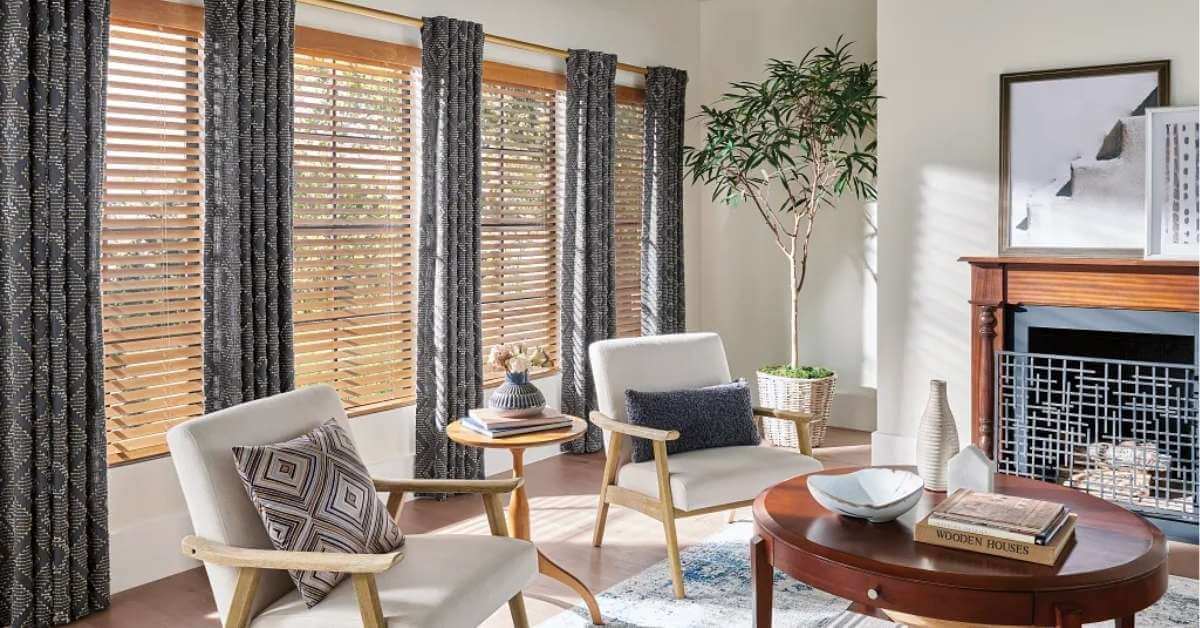
One of the most stylish and practical solutions is layering — for example, pairing blinds or shades with drapery. Use a light-filtering shade or woven blind as a base for privacy and light control. Then add a set of drapes for softness, insulation, and a finished look.
Layering lets you play with materials: perhaps a woven shade that gives earthy texture and a linen drape that brings airy softness. This combination balances practicality (light control, insulation) with style (texture, warmth, height).
Special Considerations — Corners, Bay Windows, and Odd Layouts

Corner Windows & Tight Angles
When two windows meet in a corner — common in bay windows, nooks, or angled room corners — conventional drapery can feel awkward. In those cases, inside-mounted shades or blinds on each window can work beautifully. They stay within the frame and preserve architectural lines.
If you prefer curtains, there are creative ways to handle corners. You can mount a single rod spanning both windows using elbow connectors — allowing curtains to flow around the corner. Or hang separate rods above each window, but use matching drapery panels for a cohesive feel.
Bay Windows and Window Walls
Bay windows or a row of side-by-side windows are perfect candidates for custom solutions. For instance: outside-mounted shades on each window, paired with drapes or curtains that frame the entire bay. This combination accentuates the bay’s angle while adding texture and symmetry.
Custom treatments help turn what might seem like a design headache into a feature that enhances the room.
Design Guidance — Color, Texture & Style Consistency
Match Function with Style
First, consider what you need from the window covering — light control, privacy, insulation, or aesthetics. Once the function is clear, let that guide your material and style. In a living room, you might want light-filtering window treatments; in a bedroom, blackout; in a kitchen, something easy to clean yet soft.
Keep Style Consistent Across Windows
For multiple windows in the same room or on the same wall, coordinating color, material, or style creates visual unity. Too many conflicting patterns or styles can make a room feel disjointed. Instead, pick a theme and stick to it — perhaps a neutral base for shades and a patterned drape for your accent.
Also, mixing textures (e.g., woven shades + linen drapes + soft curtains) can add depth and interest. Just be mindful not to overdo it — maintain balance.
Why Local Experts Like Unique Perspective Make All the Difference
Working with a local expert — someone who knows your home’s architecture and the coastal light of Wilmington — changes everything. From precise measurements to recommending the right mount style (inside vs. outside), material choices, and installation, a pro ensures that your window coverings don’t just look good — they perform.
At Unique Perspective, our team brings decades of experience tailoring treatments to clusters of windows. We help you think about flow, symmetry, and function — while honoring your room’s unique layout.
FAQs About Best Ideas for Covering Windows
Q1: Should I always treat closely spaced windows as one large window?
Not always. It depends on the gap between windows. If the gap is very small (about 3 inches or less), a unified treatment often works best. If the gap is wider, giving each window its own treatment can offer greater flexibility in light control, privacy, and aesthetic balance.
Q2: Can I mix shades and drapes on the same set of windows?
Absolutely. Layering shades or blinds with drapes is a popular and effective strategy. Shades provide practical benefits like light control and privacy, while drapes add softness, insulation, and design polish. The key is ensuring your materials and colors coordinate.
Q3: What if my windows are in a corner or on a bay wall — doesn’t that complicate things?
Corner and bay windows can be more challenging — but also more rewarding. Inside-mounted blinds or shades often work best. If you prefer drapes, you can use adjustable rods or elbow connectors to span around corners. Custom treatments are also a great solution, tailored to the angles and layout of your home.
Ready to Transform Your Windows?
If you’re ready to turn your cluster of windows into a cohesive, stylish focal point — or just need guidance on whether to go with shades, drapes, or a layered combination — we’d love to help. Contact Unique Perspective Window Coverings today to schedule a free in-home consultation.
Let’s work together to make your Wilmington or Brunswick County home shine — one window at a time.